Love the idea of living near the water in Wilmington? A river-adjacent home can offer beautiful views, quick access to outdoor recreation, and a daily connection to the Kankakee River that shapes this community. At the same time, owning near the river comes with a different set of maintenance, insurance, and property-level questions than a typical inland home. If you are thinking about buying or already own near the river, here’s what you should expect and what to pay close attention to. Let’s dive in.
River life in Wilmington
Wilmington is closely tied to the Kankakee River. The city sits along the river, and a large island divides the channel into wider and narrower sections, giving the area a distinct river-centered layout and identity.
That setting is a big part of the appeal. Wilmington’s recreation resources highlight parks, conservation areas, and community events that support year-round outdoor enjoyment in and around town.
Outdoor access is part of daily life
If you own a river-adjacent home here, the river is more than a nice backdrop. Nearby public spaces include North Island Park, South Island Park, Veteran’s Memorial Park, Des Plaines Fish & Wildlife Area, and Kankakee River State Park.
Kankakee River State Park adds even more to that lifestyle. According to the Illinois Department of Natural Resources, the park supports canoeing, fishing, hiking, biking, and camping, and it includes boat ramps and more than 200 campsites.
Views come with practical tradeoffs
For many buyers, the attraction is easy to understand. You may get scenic surroundings and quicker access to fishing, paddling, or trail time than you would in a more typical suburban setting.
But two homes with a similar river view can have very different ownership demands. In Wilmington, the lot itself matters just as much as the view from the porch.
Lot conditions matter more than scenery
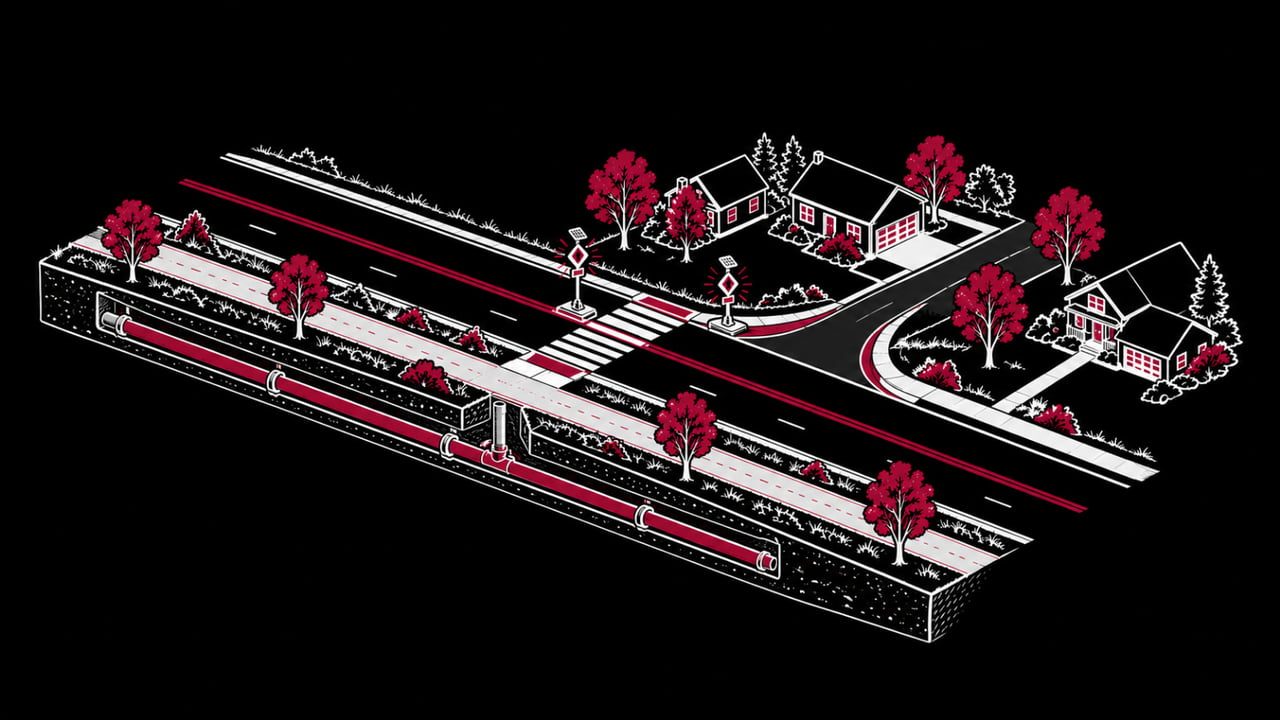
One of the biggest things to expect with a river-adjacent home is a stronger focus on drainage and site conditions. Wilmington’s subdivision rules require stormwater or surface drainage systems that can handle a 10-year flood, require drainage away from the foundation, and require erosion and sediment control during clearing, grading, and construction.
That tells you something important as a buyer. In this market, water management is not a side issue. It is part of how a property needs to function.
Floodplain checks are essential
Wilmington’s local maps page directs residents to FEMA floodplain maps and notes that the Illinois State Water Survey also provides floodplain maps. The same city resource notes that county property searches can be done by address or PIN.
Before you get too attached to a home, it is smart to look at parcel-level mapping, not just the general area. A house that feels close to the river may sit differently than the one next door when it comes to floodplain location, drainage path, or lot elevation.
Shoreline stability can vary
River-adjacent ownership is not only about floodplain lines. Illinois State Water Survey research has mapped bank erosion and sand bars along the Kankakee River near Wilmington, which makes shoreline stability a worthwhile question for any property near the water.
This is especially important if you are comparing multiple homes. One parcel may have a more stable bank or a different drainage pattern than another, even within the same stretch of town.
Home features you may need
Homes near the river often benefit from features designed to manage water risk better. Practical items to look for include sump pumps, backflow valves, elevated utilities, and flood-resistant materials.
Some mitigation work may also require licensed professionals. FEMA notes that certain improvements should be handled by licensed electricians or plumbers, which is worth keeping in mind if you are planning repairs or upgrades after closing.
Additions and repairs may need extra review
If you plan to remodel, rebuild, or make major repairs, expect more property-specific review than you might with a standard lot. Wilmington’s maps page and subdivision rules reinforce that floodplain, drainage, and grading review are part of the local ownership picture.
That does not mean a project cannot move forward. It means you should expect to ask more questions early and make sure your plans match the site conditions.
Seasonal maintenance is different here
Owning near the river usually means paying closer attention to weather and runoff throughout the year. Illinois climate guidance notes that the polar jet stream often sits near or over the state in fall, winter, and spring, helping explain frequent shifts in clouds, wind, and precipitation.
In practical terms, that means conditions can change quickly. A river-adjacent property often asks more of you when it comes to routine exterior upkeep and watching how water moves across the lot.
Spring deserves extra attention
The National Weather Service says spring flood risk can depend on snow cover, soil moisture, river levels, river ice, and spring precipitation. It also notes that heavy rainfall can still produce flooding even when the broader seasonal outlook is moderate.
Will County has also issued flood watches tied to Kankakee River ice jams and has described sudden flooding on Wilmington’s North and South Islands when water levels rose quickly. For owners near the river, thaw periods and heavy rain are times to stay especially alert.
Water management is the real maintenance priority
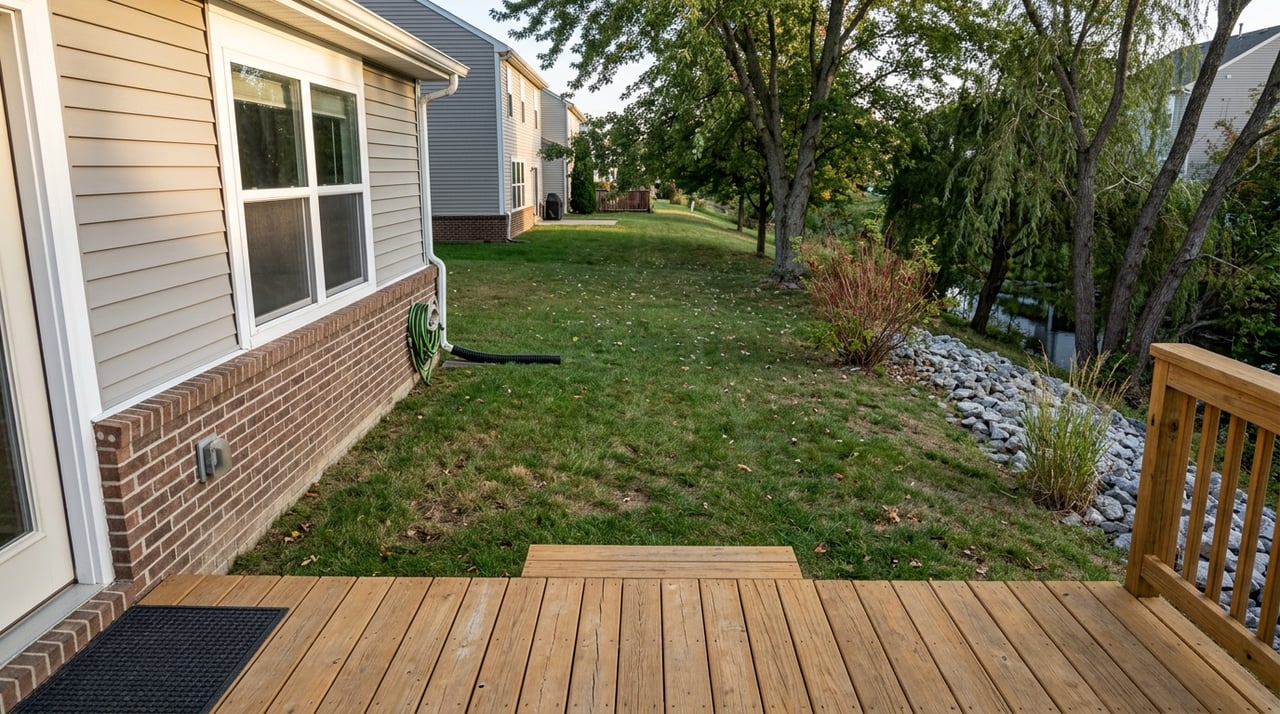
In a river setting, maintenance is less about appearance and more about flow. Keeping gutters and downspouts clear, making sure grading sends water away from the home, and checking drainage areas after storms all become more important.
FEMA recommends keeping nearby drainage clear and making sure stormwater drains away from the home. The EPA also notes that runoff from roofs, pavement, and lawns can carry pollutants into streams, so responsible landscaping and lawn care matter too.
Flood insurance is a separate conversation
One of the most common surprises for buyers is insurance. FEMA states that standard homeowners insurance does not cover flood damage, and flood insurance is a separate product.
That means you should not assume your regular policy covers river-related flooding. This is a key question to sort out early, especially before closing.
What NFIP coverage generally includes
NFIP policies provide building coverage and contents coverage. FloodSmart also notes that building and contents coverage are usually purchased separately.
Timing matters too. FloodSmart says NFIP coverage typically starts 30 days after purchase, with some exceptions when the policy is bought while making, increasing, extending, or renewing a mortgage.
What flood insurance may not cover
Buyers should also know that not every loss tied to flooding is covered. FloodSmart says NFIP does not cover landscaping, septic systems, decks, patios, fences, swimming pools, temporary housing, or additional living expenses.
That is why it helps to review coverage carefully instead of making assumptions. A river-adjacent purchase often requires a more detailed insurance conversation than a standard home purchase.
Expect to lean on the right specialists
Buying near the river is often smoother when you build the right team early. Depending on the property, that may include your insurance agent, home inspector, surveyor, licensed electrician, licensed plumber, and contractors with flood-mitigation experience.
FEMA also recommends contacting the local planning and zoning office or building department and asking for the floodplain administrator. For buyers who want fewer surprises, those conversations can be very helpful before you finalize plans or improvements.
Good guidance can save time and stress
This is where local knowledge really matters. A river-adjacent home can be a great fit, but it usually rewards buyers who take a careful, property-by-property approach instead of relying on general impressions.
If you are comparing homes in Wilmington, the smartest move is to look beyond the view and understand the lot, drainage, and insurance picture in detail. That kind of upfront work can help you buy with more confidence.
If you are thinking about buying or selling a river-adjacent home in Wilmington, working with someone who understands waterfront and small-town properties can make the process a lot clearer. Christopher Piercy can help you evaluate the details, connect with trusted local partners, and build a smart plan for your next move.
FAQs
What should buyers check before buying a river-adjacent home in Wilmington?
- Review parcel-level floodplain maps, drainage patterns, lot grading, and bank condition, since two nearby homes can have very different risk profiles.
What is different about maintaining a river-adjacent home in Wilmington?
- You should expect to pay closer attention to gutters, downspouts, grading, runoff, and post-storm cleanup than you would with a more typical inland lot.
What does flood insurance mean for Wilmington river-adjacent homes?
- Standard homeowners insurance does not cover flood damage, so you may need separate flood insurance and should review what building and contents coverage includes.
What outdoor benefits come with living near the Kankakee River in Wilmington?
- You may enjoy easier access to parks, fishing, canoeing, hiking, biking, camping, and other river-centered recreation throughout the year.
What professionals help with a river-adjacent home purchase in Wilmington?
- The most helpful specialists often include an insurance agent, inspector, surveyor, licensed electrician, licensed plumber, and contractors with flood-mitigation experience.